
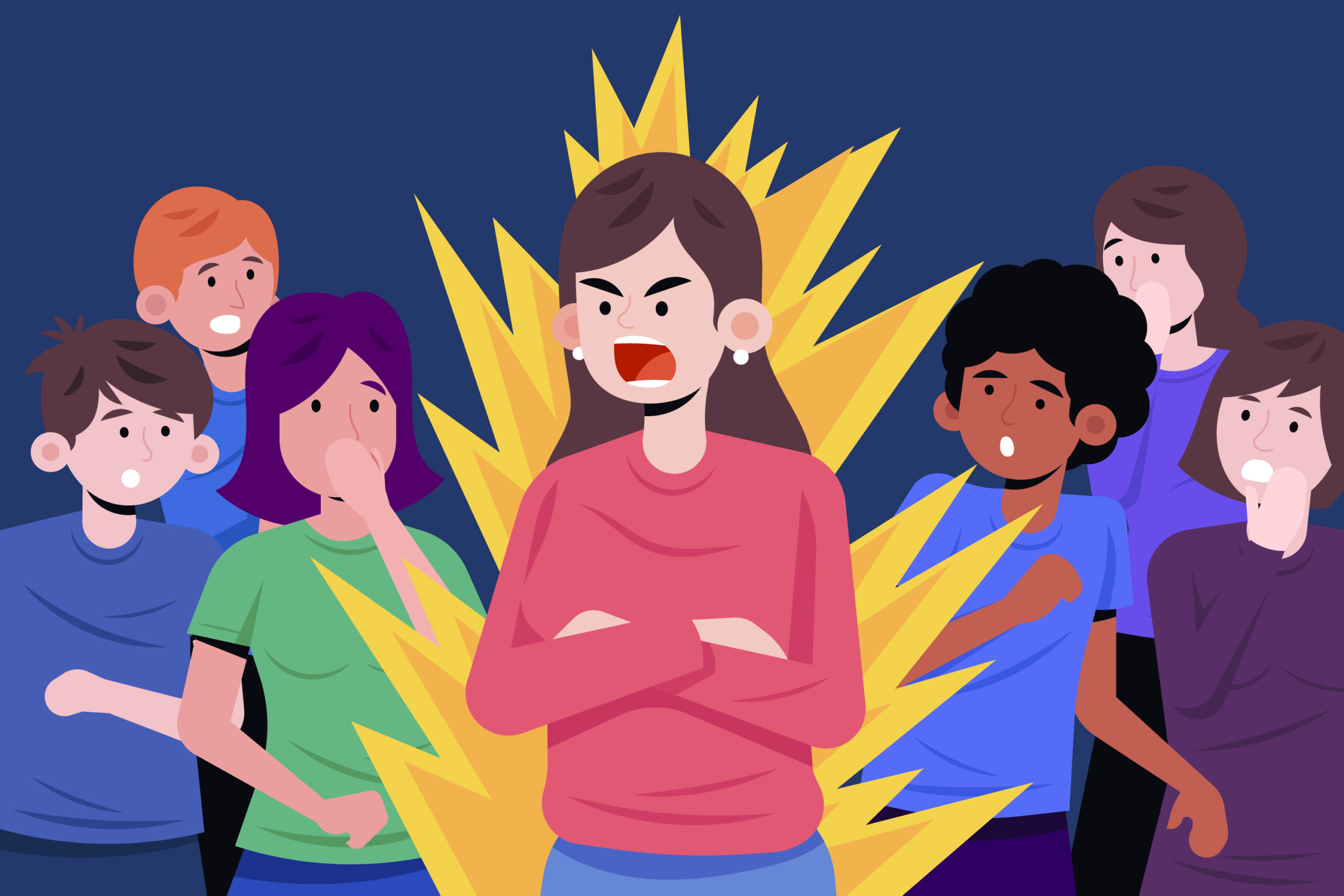
Anger is usually never something people want to hold onto, especially when it comes from a place deep inside them. The “angry daughter” is no exception. On almost every social media platform, I’ve noticed a rise in the term “angry daughter” which refers to the female child (oftentimes) who is perceived as the angry and hostile individual by her family. This is not an official label (as of yet), but people online have begun to talk about how responsibilities, stressors, and family dynamics can cause an immense amount of anger to build up in daughters. Eventually, before one knows it, this built up anger can creep into relationships, and bleeds out in unhealthy ways. I speak from personal experiences that this anger is not great. I also think the pressure of everything and the anger that accumulates as a result of everything is far heavier for those who are the oldest sibling regardless of gender.
Oftentimes, the oldest child is required to be the role model so they need to be ‘perfect’. This requirement can cause a lot of internal conflict growing up, as I remember it had. Being the oldest daughter, however, made it worse.
To understand this further, I tried to understand the theoretical underpinning which lead me to learn about something called ‘parentification’. Now, before jumping into it, I want to say that this is my attempt to explain how parentification is tied to the term “angry daughter” since people online are using both terms and I could not find an article directly associating the two.
According to Earley and Cushy (2002), parentification can entail a lot and the years of literature and research gone into understanding it have evolved from one another. Now, a parentified child is understood as a child who will take on the “expectation from a parental figure…[and] will fulfil a parental role within the family system” (p. 165). This was found to be associated with the concept of ‘role reversal’ and ‘child-as-mate role reversal’, as the roles between a child and caregiver or parental figure become swapped. For instance, the child may be expected to act like a parent or a mature individual for their parent, and this could result in them defending, befriending, and caring for the parent(s). This also could apply to siblings, as the parentified child may become a caregiver (or in other words, a “parent”) for their siblings.
You may think this is not as concerning because the belief that your parents can be your friends is accepted by many and children should care for their parents/siblings, but in fact, there is a thin line for when it is normal versus dangerous to your own growth. It was found that crossing the line can compromise development for children, especially when children are compelled to become mature for their age and/or shoulder the burdens that are not meant for them just yet. There was also an impact found on parentified children’s relationships once they became adults and this was a consequence because of their distorted understanding of their role in that relationship; many struggled with setting boundaries, low self-esteem, accepting rejection, and adopting a strong caretaker, fixer or rescuer role (Earley & Cushy, 2002).
To relate Earley and Cushy (2002) with the theme of the “angry daughter”, the researchers found that role reversal was detrimental for daughters growing up because it continued the pattern of disregarding/dismissing their needs in romantic relationships; it makes sense because if you grow up worrying about meeting other’s needs, there is a pretty good chance you’ll forget or minimize yours along the way. I think at some point the dismissal of your own needs and the anger that comes after realizing what you lost growing up makes the daughter the “angry daughter”. Similarly, once boundaries are set and work is done to heal from being parentified and experiencing role-reversal, I think the label sticks harder. You may have heard a version of this, but I believe when people see you in a certain way and then you change, they will either accept or resent you.
An “angry daughter” may just be a label because others see the daughter as an angry person rather than someone who is fed up/exhausted/mad about the fact they need to defend or justify themselves. This should not be about them though. It never is. Do not hold that anger if you do not want to and do not think too hard about what other’s expect from you. This is your life after all.
References
Earley, L., & Cushway, D. (2002). The parentified child. Clinical Child Psychology and Psychiatry, 7(2), 163–178. https://doi-org.proxy.lib.sfu.ca/10.1177/1359104502007002005
Image courtesy of Freepik.com
Note: The Free Your Mind Mental Health Society is an independent youth-led organization. The contents of this blog are not intended to be a substitute for professional medical advice, diagnosis, or treatment. Always seek the advice of your physician or another qualified health provider with any questions you may have regarding a medical condition. In the event of a medical emergency, please call your doctor or 911 or other local emergency numbers immediately.



Leave A Comment